Samsung HW-Q990F review: the critics’ verdict
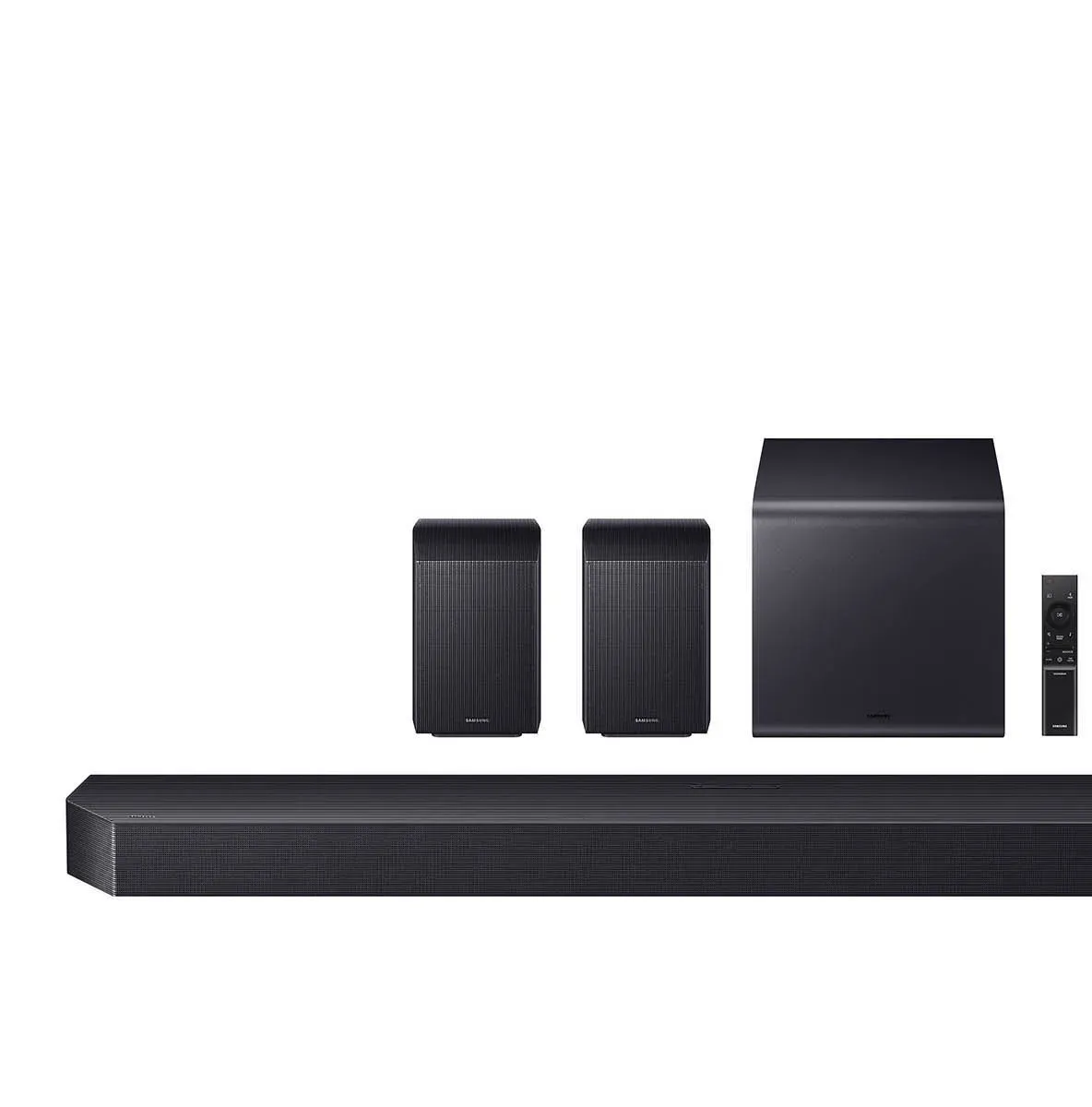
Product image · Source
Reviewers agree: huge, believable Dolby Atmos sound with easy setup, but at a steep price.
What reviewers loved
- The 11.1.4-channel package produces a huge, enveloping soundstage, with WIRED reporting that effects convincingly move around the listener in smaller and medium-size rooms.
- Its upward-, side- and angle-firing drivers deliver believable Dolby Atmos height and surround effects without the cables and complexity of a traditional receiver-based system.
- What Hi-Fi? praises the upgraded subwoofer for rich, controlled and tonally varied bass rather than indiscriminate rumble.
- Setup is straightforward, while two HDMI 2.1 inputs, eARC and broad wireless streaming support make it flexible for TVs, consoles and mixed-platform households.
- The complete bar, subwoofer and rear-speaker package is more discreet than a conventional home-cinema speaker system.
What held it back
- The $1999 official US price is substantial, and What Hi-Fi? notes that the older HW-Q990D may sell for around half as much.
- WIRED found Samsung’s Q Symphony TV integration overrated, so owning a compatible Samsung TV is not a compelling reason by itself to upgrade.
- What Hi-Fi? says the familiar design is beginning to look dated and finds the dot-matrix display difficult to read.
- The reflected height and surround effects depend on placing the rear speakers where sound can bounce effectively from the walls and ceiling.
Samsung HW-Q990F key specs
| Channels | 11.1.4 |
|---|---|
| Drivers | 23 across the soundbar, surrounds and subwoofer |
| Connections | HDMI eARC output, two HDMI 2.1 inputs, optical, Wi-Fi and Bluetooth |
| Audio formats | Dolby Atmos, Dolby TrueHD, Dolby Digital Plus and DTS:X |
| Streaming | AirPlay 2, Spotify Connect, Tidal Connect, Amazon Music and Deezer |
| Official price | £1699 / $1999 / AU$1999 |
The short version
Critics describe the HW-Q990F as a convincing alternative to a traditional separates system. WIRED praises its easy setup and room-filling Atmos presentation, What Hi-Fi? highlights its clearer, more controlled bass, and PCMag calls the surround effect believable. The catch is value: it is expensive, while the older HW-Q990D may still be available for much less.
What reviewers say about the Samsung HW-Q990F
WIRED scored the HW-Q990F 8/10 and praised its easy setup, discreet footprint and massive soundstage. The reviewer said its angled and side-firing speakers made sounds feel as though they were attacking from all sides, while noting that Q Symphony was overrated.
What Hi-Fi? named it an Awards 2025 winner and praised its crisp, detailed and dynamic presentation alongside a serious improvement in bass. PCMag rated it 4.5 out of 5, citing stunning audio, believable surround sound, broad wireless support and multiple HDMI 2.1 inputs. Price is the clearest point of agreement against it.
Best settings for the Samsung HW-Q990F
No calibration values were supplied in the provided reviews, so these are published placement instructions rather than invented sound settings. Rear-speaker positioning matters because the system uses reflected sound for its surround and height effects. Read the full What Hi-Fi? review.
| Rear-speaker angle | Place the surround speakers 135–150 degrees behind the listening position. Samsung says the system can compensate if you need to position them differently. |
|---|---|
| Subwoofer placement | Place the subwoofer near a power outlet. |
| Soundbar placement | Position the main soundbar below the TV. |
Buy it if you want powerful, convincing Atmos surround sound without installing a receiver and a room full of wired speakers.
Skip it if value matters most, especially while the closely related HW-Q990D remains available at a much lower price.
Also consider
Samsung HW-Q990D
The previous model remains widely available and, according to What Hi-Fi?, can cost around half as much as the HW-Q990F. It is the obvious value alternative.
Should you buy the Samsung HW-Q990F?
The HW-Q990F makes sense for buyers who want a complete, high-end Dolby Atmos package with minimal setup fuss. Critics consistently praise its scale, surround precision, bass control and connectivity. But the new model carries a steep official price, and the discounted HW-Q990D complicates the decision. Buy the Q990F if you want Samsung’s latest complete system and can find it near the reported $1600 discount price; otherwise, compare the Q990D first.
See our best Audio picks.
How we build this review
We read 4 professional reviews from WIRED, What Hi-Fi?, PCMag, RTINGS. We don’t test units ourselves — we distill what critics agree on. Every claim is cited.
Sources
RightWei aggregates and summarizes independent reviews — we link to the original hands-on tests so you can go deeper. We don’t test units ourselves.
Re-checked July 2026