Sonos Era 300 review roundup: the critics’ verdict
Product image · Source
“An immensely immersive experience,” says What Hi-Fi?.
What reviewers loved
- Class-leading spatial presentation for a single speaker, with convincing height, width and separation reported by TechRadar and What Hi-Fi?.
- Deep, impactful bass and detailed, dynamic sound that PCMag and CNET say can comfortably fill a room.
- Bluetooth, AirPlay 2 and USB-C line-in make it easier to play from devices outside the usual Sonos Wi-Fi workflow.
- Strong Sonos multi-room integration, with the option to add more Sonos speakers for a larger Dolby Atmos home-theater system.
- High-quality controls and construction, including dedicated playback controls and a physical switch that cuts power to the microphones.
What held it back
- It is a premium-priced speaker, while CNET notes that the Amazon Echo Studio offers cheaper spatial-audio competition.
- Dolby Atmos music quality is inconsistent. The Verge says standout mixes can be exceptional, but weaker mixes undermine the main selling point.
- It trails the Sonos Five for conventional stereo fidelity, according to TechRadar and The Verge.
- Google Assistant and Google Cast are not supported, a limitation highlighted by PCMag.
Sonos Era 300 key specs
| Spatial audio | Dolby Atmos |
|---|---|
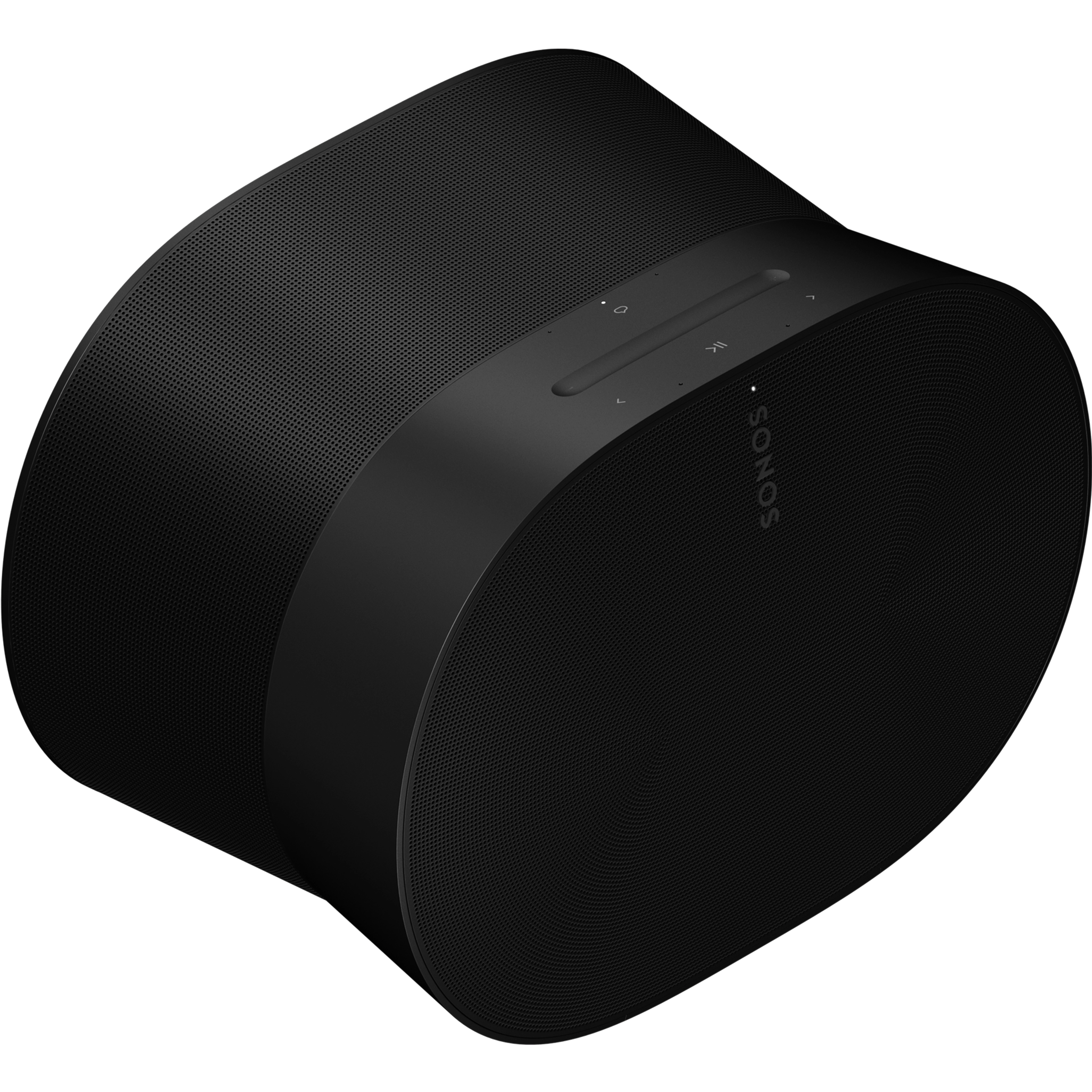
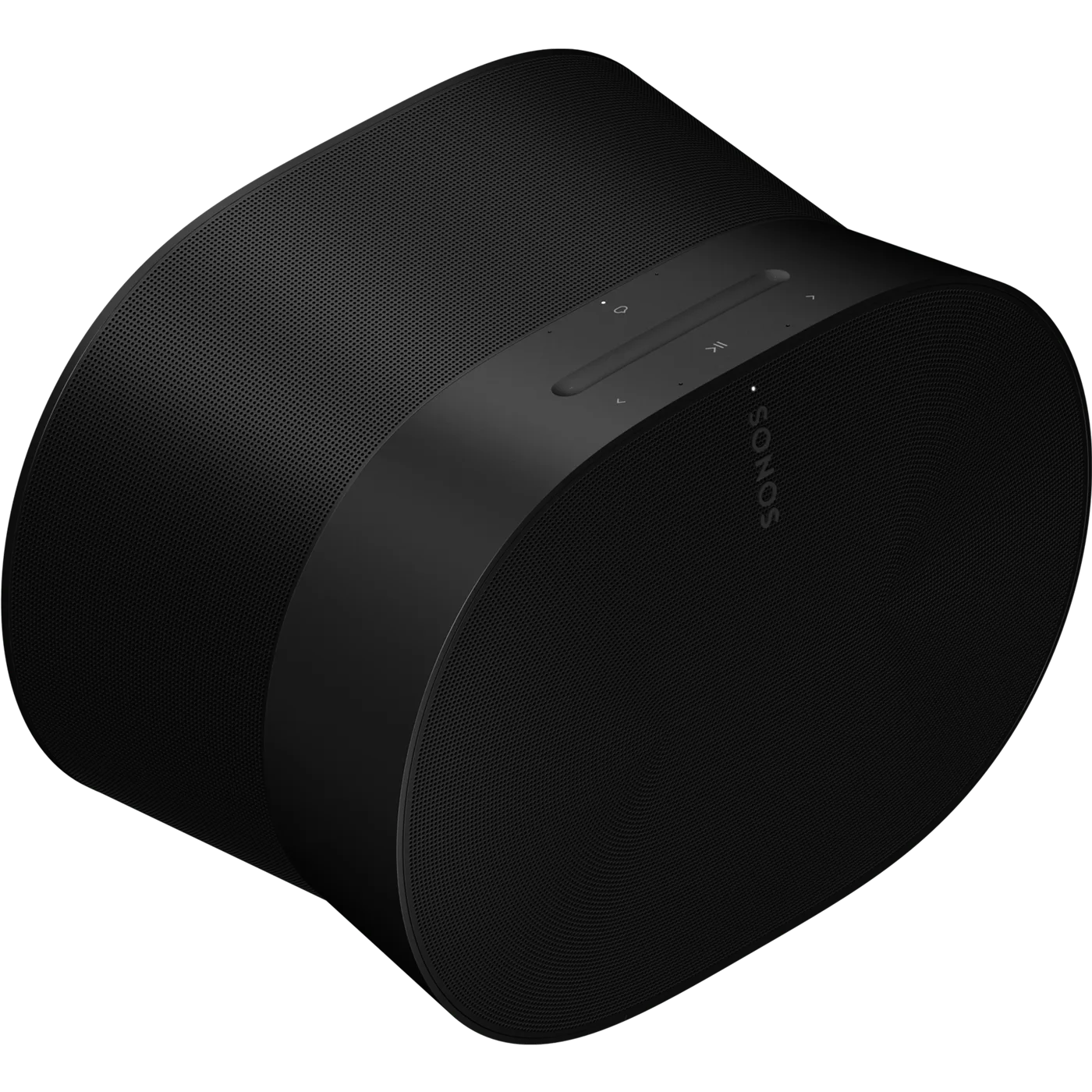
| Drivers | Four tweeters and two angled woofers |
| Wireless | Wi-Fi, Bluetooth and AirPlay 2 |
| Wired input | USB-C line-in with an optional 3.5mm input solution |
| Voice control | Amazon Alexa and Sonos Voice Control |
| Colors | Black or white |
The short version
Reviewers agree that the Sonos Era 300 produces unusually wide, tall and room-filling sound from one speaker. Dolby Atmos tracks can sound remarkably immersive, while bass, detail and dynamics also earn praise. Bluetooth, USB-C line-in and strong Sonos multi-room integration add flexibility. The honest trade-off is that Atmos mixes vary widely, conventional stereo still favors the Sonos Five, and there is no Google Assistant or Google Cast support.
What reviewers say about the Sonos Era 300
TechRadar reports an exceptionally expansive presentation, with clear separation between left and right channels even during stereo playback. What Hi-Fi? reaches a similar conclusion, praising the speaker’s scale, detail, cohesion, impactful bass and rhythmic ability. PCMag also describes loud, room-filling performance with full-bodied bass and detailed highs.
The caveats are consistent. The Verge says good spatial tracks can sound unlike anything else from a standalone speaker, but Atmos mixes remain wildly uneven. TechRadar and The Verge both favor the Sonos Five for traditional stereo listening. CNET finds the Era 300 more refined than the cheaper Echo Studio, while PCMag flags the missing Google Assistant and Google Cast support.
Best settings for the Sonos Era 300
Room tuning is more useful here than copying generic EQ numbers because the Era 300 relies heavily on room acoustics. Follow What Hi-Fi?’s published Sonos Trueplay guide. Read the full What Hi-Fi? review.
| Room tuning | Run Sonos Trueplay using the linked guide; the supplied professional reviews do not publish universal bass or treble settings. |
|---|
Buy it if you want the most immersive spatial-audio experience critics have heard from a single Sonos speaker and value the wider Sonos ecosystem.
Skip it if pure stereo fidelity, quiet background listening, Google integration or the lowest possible price matters more than Dolby Atmos.
Also consider
Sonos Five
The better Sonos choice for buyers prioritizing conventional stereo fidelity over spatial audio, according to TechRadar and The Verge.
Amazon Echo Studio
A cheaper spatial-audio alternative, though CNET found the Era 300 more refined and enjoyable.
Sonos Era 100
PCMag calls it a good lower-priced alternative, but it lacks spatial audio support and is substantially less powerful.
Should you buy the Sonos Era 300?
Yes, if spatial music is the priority. Critics consistently praise the Era 300 for producing a larger, taller and more enveloping sound than expected from one compact speaker. It also offers useful Bluetooth and line-in flexibility and fits neatly into a Sonos multi-room or theater system. But the speaker cannot fix inconsistent Atmos mixes, and the Sonos Five remains the safer choice for stereo purists.
See our best Audio picks.
How we build this review
We read 5 professional reviews from TechRadar, CNET, What Hi-Fi?, PCMag, The Verge. We don’t test units ourselves — we distill what critics agree on. Every claim is cited.
Sources
RightWei aggregates and summarizes independent reviews — we link to the original hands-on tests so you can go deeper. We don’t test units ourselves.
Re-checked July 2026