Asus ROG Ally X Review: The Clear Buying Verdict
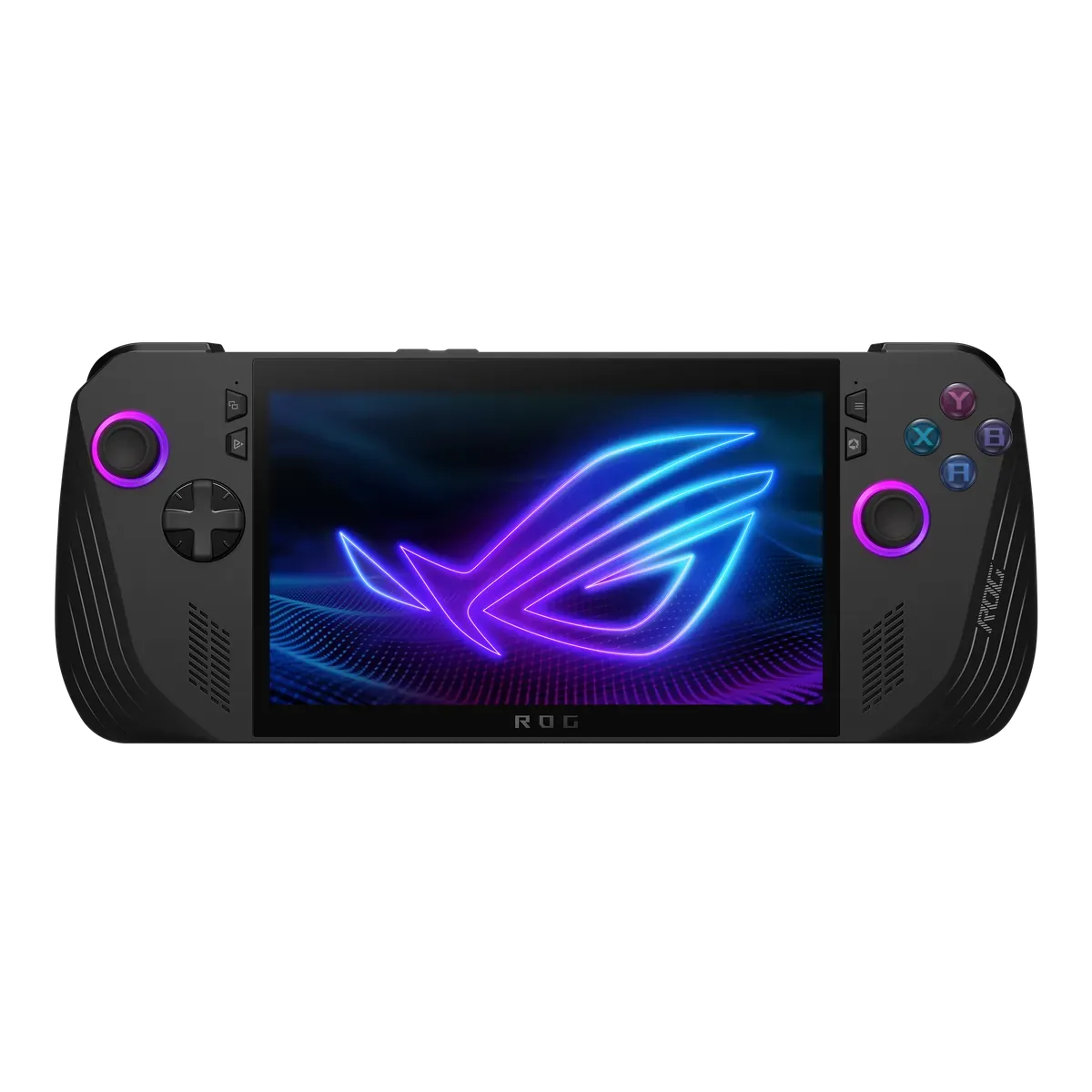
Product image · Source
"The ROG Ally X enhances Asus' handheld gaming console with extra storage and battery life." — PCMag
What reviewers loved
- The doubled 80Wh battery makes longer gaming sessions realistic; WIRED nearly reached three hours in Doom Eternal, versus barely more than an hour on the original Ally.
- The 1TB SSD provides twice the original model's storage, while the accessible M.2 2280 drive leaves room for future upgrades.
- The redesigned grips, more precise D-pad, improved control layout and smaller rear buttons make the handheld more comfortable and reduce accidental inputs.
- Its 24GB of faster shared memory supports snappy performance, with TechRadar calling it the best-performing handheld available at the time of review.
- Two USB-C connections, including a USB4 port, are more flexible for docks and accessories than the original model's specialized XG Mobile connection.
What held it back
- At $800, it is expensive enough that both PCMag and TechRadar suggest considering a more powerful gaming laptop instead.
- Windows 11 remains frustrating to navigate without a mouse and keyboard, undercutting the simplicity expected from a handheld console.
- Battery life is much better, but WIRED reports that it still trails more mobile-focused devices such as the Steam Deck and Nintendo Switch.
- The processor and 7-inch full-HD display carry over from the original Ally, so existing owners are not getting a complete generational overhaul.
Asus ROG Ally X key specs
| Processor | AMD Ryzen Z1 Extreme |
|---|---|
| Display | 7-inch 1,920 x 1,080 IPS touchscreen, 120Hz |
| Memory | 24GB LPDDR5 |
| Storage | 1TB M.2 2280 NVMe SSD |
| Battery | 80Wh |
| Operating system | Windows 11 |
The short version
Reviewers agree that the ROG Ally X is a substantial improvement over the original Ally. Its doubled 80Wh battery, 1TB SSD, 24GB of memory and more comfortable controls make it one of the strongest Windows gaming handhelds available. The trade-off is blunt: Windows 11 remains awkward on a handheld, and the $800 price moves uncomfortably close to gaming-laptop territory.
What reviewers say about the Asus ROG Ally X
PCMag rates the Ally X as an Editors' Choice Windows handheld and says the extra $100 over the original is justified by its longer battery life, doubled storage, faster memory and improved design. TechRadar reaches a similar hardware verdict, praising its power, battery and premium-feeling construction while warning that it cannot match a gaming laptop at the same price.
WIRED is more reserved. It calls the Ally X a substantial improvement and says battery life has finally crossed into acceptable territory, but gives it 6/10 because Windows remains poorly suited to handheld controls. CNET also highlights the practical redesign: deeper rounded grips, a more precise D-pad, sturdier joysticks, smaller rear buttons and more useful USB-C connectivity.
Best settings for the Asus ROG Ally X
The supplied professional reviews do not publish a verified game-performance or calibration settings guide for the ROG Ally X. We have therefore left this section blank rather than inventing recommended values.
Buy it if you want a powerful Windows handheld with meaningfully better battery life, generous storage and access to full PC software.
Skip it if you already own the original Ally, dislike dealing with Windows on a small screen or want the most performance possible for $800.
Also consider
Steam Deck
PCMag calls it the non-Windows champion, while WIRED says its mobile-focused software and optimizations still give it an efficiency advantage.
Lenovo Legion Go
PCMag prefers the ROG Ally X among Windows handhelds, citing the Asus model's overall improvements.
MSI Claw
PCMag also favors the ROG Ally X over the MSI Claw as a Windows-based handheld option.
Sub-$1,000 gaming laptop
Both PCMag and TechRadar warn that a similarly priced laptop can provide greater gaming power, but without the Ally X's handheld portability.
Should you buy the Asus ROG Ally X?
The ROG Ally X is the version of Asus' handheld that critics wanted the first time around. The much larger battery addresses the original model's clearest weakness, while the added memory, 1TB SSD, better controls and flexible ports make it easier to live with. It is a strong choice for buyers committed to portable Windows gaming. It is less convincing for original Ally owners or anyone who prioritizes value and console-like simplicity.
See our best Gadgets picks.
How we build this review
We read 4 professional reviews from PCMag, WIRED, TechRadar, CNET. We don’t test units ourselves — we distill what critics agree on. Every claim is cited.
Sources
RightWei aggregates and summarizes independent reviews — we link to the original hands-on tests so you can go deeper. We don’t test units ourselves.
Re-checked July 2026