TCL QM8K Review Roundup: The Clear Buying Verdict
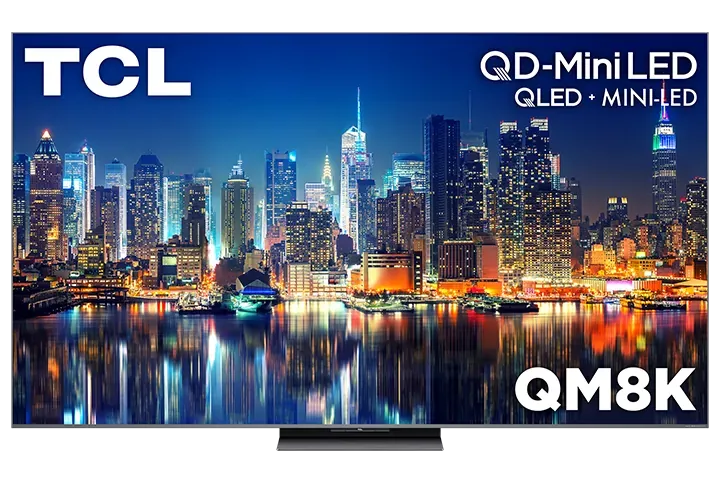
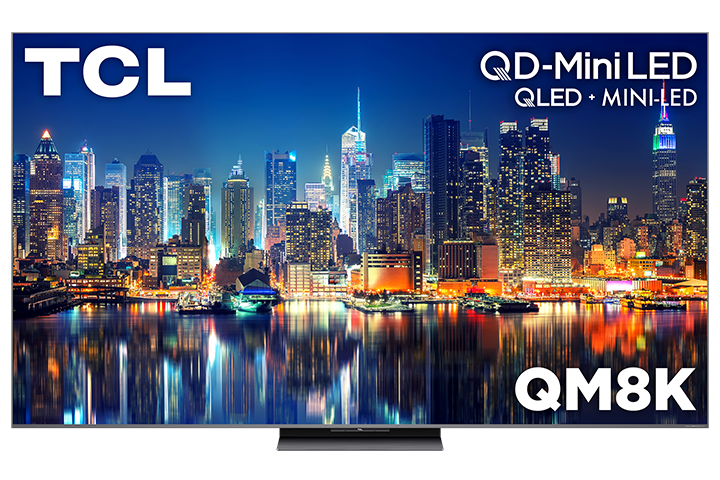
Product image · Source
Critics agree the QM8K delivers excellent contrast, serious brightness and strong gaming features, but some rivals are more vibrant or better equipped.
What reviewers loved
- Excellent contrast and shadow detail, with anti-halo backlight control that keeps bright highlights and dark picture areas clearly separated.
- Extreme brightness gives HDR movies and games real impact, while PCMag found colors vibrant and accurate rather than oversaturated.
- A 144Hz panel, VRR and FreeSync Premium Pro make it well equipped for gaming; PCMag measured less than one frame of input lag.
- Strong off-angle performance preserves color and contrast for viewers sitting toward the sides of the room.
- The 2.2.2-channel Dolby Atmos system is more substantial than basic TV audio, and PCMag rates the built-in speakers positively.
What held it back
- CNET found standard-dynamic-range measurements surprisingly inconsistent for a flagship TV.
- Its picture is less vibrant than some rivals, and CNET says the older QM851 was brighter and more saturated.
- Only two HDMI inputs support 4K at 144Hz, which can be restrictive for buyers connecting several current gaming devices.
- What Hi-Fi? noticed occasional misplaced audio focus, while PCMag says the competing Hisense U8QG has a more impressive speaker system.
TCL QM8K key specs
| Display | 4K mini-LED LCD |
|---|---|
| Resolution | 3,840 x 2,160 |
| Native refresh rate | 144Hz |
| Gaming support | VRR and AMD FreeSync Premium Pro |
| HDMI ports | Four total; two support 4K at 144Hz |
| HDR formats | Dolby Vision and HDR10 |
The short version
Reviewers broadly see the TCL QM8K as a high-value flagship mini-LED TV. CNET praises its excellent contrast, shadow detail and cinematic HDR presentation, while What Hi-Fi? highlights its extreme brightness and outstanding backlight control. PCMag also reports strong viewing angles, natural color and low gaming latency. The trade-offs are inconsistent standard-dynamic-range performance, only two 4K144 HDMI inputs and tough competition from Hisense. It makes the most sense when discounted near the roughly $1,600 price reported by multiple critics.
What reviewers say about the TCL QM8K
Picture quality is the central strength. CNET reports excellent contrast and shadow detail, particularly with HDR movies and games, and says TCL's anti-halo technology improves the cinematic presentation. What Hi-Fi? similarly praises the combination of "extreme brightness" and "outstanding backlight control." PCMag found bright scenes colorful and lifelike, while dark clothing and textures remained easy to distinguish in demanding contrast tests.
It is also a capable gaming and living-room TV. PCMag measured 12.9ms of input lag with a 4K60 signal and 4.6ms at 1080p, alongside support for 144Hz, VRR and FreeSync Premium Pro. Viewing angles are reportedly strong. Still, CNET found SDR performance inconsistent and judged the Hisense U8Q better for gaming, while What Hi-Fi? flags the limit of two HDMI 2.1-class inputs.
Best settings for the TCL QM8K
RTINGS publishes a dedicated QM8K settings guide. the cited sources does not include its recommended values, so use the linked guide rather than relying on invented calibration numbers.
Buy it if you want a very bright, cinematic mini-LED TV with excellent contrast, wide viewing angles and strong gaming performance at a substantial discount from OLED pricing.
Skip it if you need more than two high-bandwidth gaming inputs, prioritize maximum color punch, or can get the Hisense U8Q/U8QG for less.
Also consider
Hisense U8Q / U8QG
The closest mini-LED rival. CNET prefers the TCL's more cinematic look but says the Hisense is better for gaming. PCMag also gives the Hisense an edge for its 4.1.2-channel audio system, DisplayPort-compatible USB-C connection and lower reported price.
LG C5 OLED
A more expensive OLED alternative cited by CNET. The QM8K aims to approach OLED-like contrast for less, though the comparison depends heavily on current discounts.
TCL QM851
The previous model is brighter and more saturated according to CNET, but it may be difficult to find in stock.
Sony Bravia 7
What Hi-Fi? identifies Sony's similarly priced mini-LED model as one of the QM8K's main LCD competitors.
Should you buy the TCL QM8K?
Yes, if the price is right. The professional consensus points to a bright, high-contrast mini-LED TV that is particularly convincing with HDR films and games. Its wide viewing angles and low latency broaden its appeal. But do not pay a large premium over the Hisense U8Q/U8QG, and check whether two 4K144 HDMI inputs are enough for your setup.
See our best TVs picks.
How we build this review
We read 4 professional reviews from CNET, PCMag, What Hi-Fi?, RTINGS. We don’t test units ourselves — we distill what critics agree on. Every claim is cited.
Sources
RightWei aggregates and summarizes independent reviews — we link to the original hands-on tests so you can go deeper. We don’t test units ourselves.
Re-checked July 2026